
Complete Guide to CCTV Installation in Oman
Oman’s cities are growing fast, and so is the need to protect homes, shops, and offices. From busy retail streets in Muscat to quiet residential compounds in Salalah, more property owners are asking the same question: how do I set up a reliable security camera system without wasting money or breaking local rules?
This guide walks you through everything you need to know about CCTV installation in Oman – from choosing the right cameras to understanding costs, legal requirements, and common mistakes to avoid. Whether you’re a homeowner, a shop owner, or a facility manager, you’ll leave with a clear, practical roadmap.
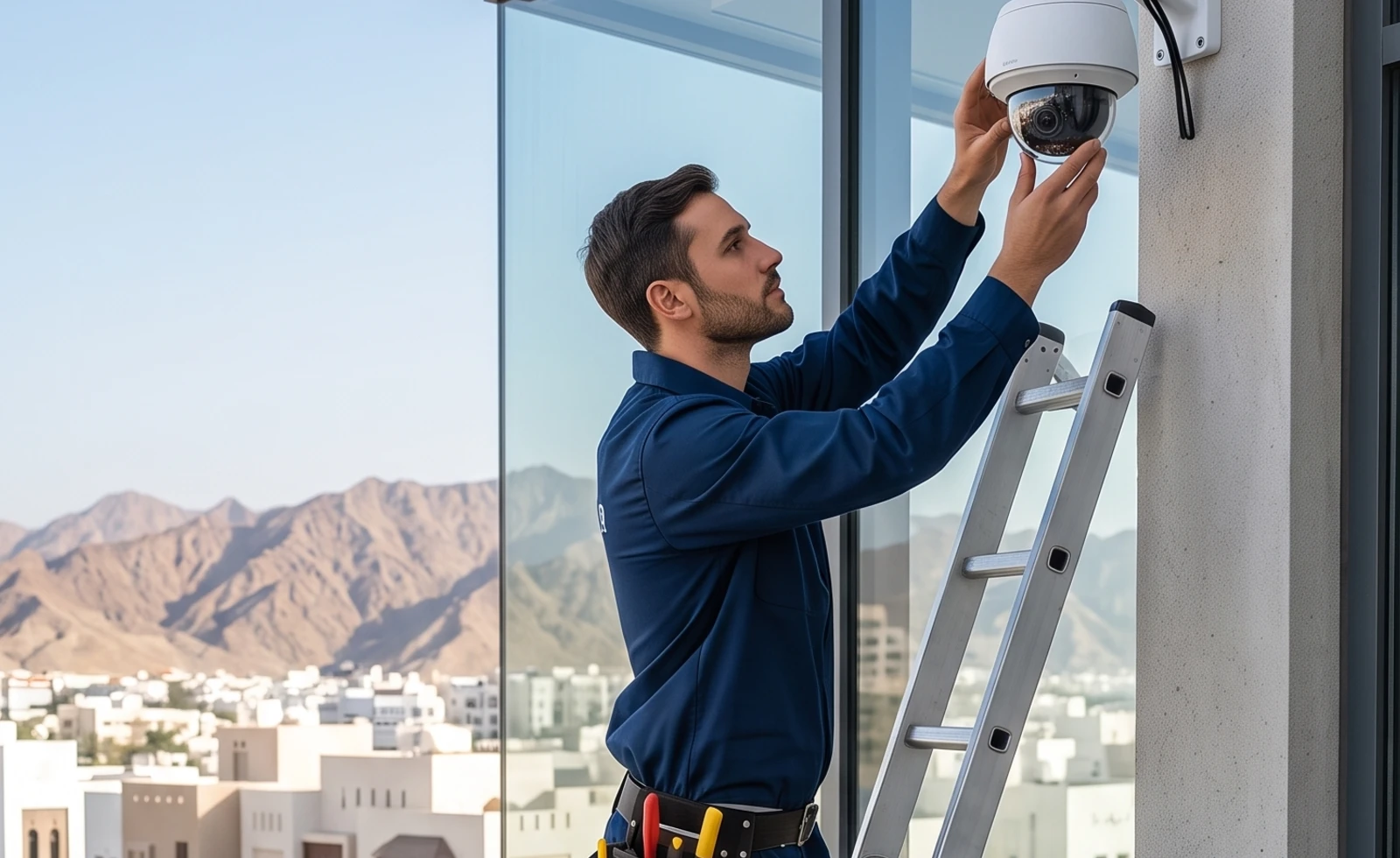
Why CCTV Matters More Than Ever in Oman
Oman has seen steady growth in retail, tourism, logistics, and residential development over the past few years. With that growth comes a natural rise in security concerns. A well-placed CCTV surveillance camera system in Oman does more than just record footage – it deters theft, helps resolve disputes, supports insurance claims, and gives families and business owners genuine peace of mind.
Beyond crime prevention, cameras today double as tools for operational insight. Retailers use them to study customer flow, warehouses use them to monitor staff safety, and residential compounds use them to manage visitor access. Security has become a layered investment rather than a single-purpose expense.
Understanding the Basics: How a CCTV System Works
Before diving into installation, it helps to understand the moving parts of a modern setup. Every functioning system is really built on four core components working together:
- Cameras – capture video at the point of interest (entrances, parking, corridors, etc.)
- Recorder – a DVR (for analog cameras) or NVR (for IP/network cameras) that stores footage
- Storage – hard drives or cloud storage that hold recordings for a set retention period
- Viewing device – a monitor, smartphone app, or control room screen for live and recorded playback
Get any one of these wrong – an underpowered recorder, insufficient storage, or a camera with the wrong lens – and the entire system underperforms, even if the camera itself is expensive.
Step 1: Assess Your Property and Security Goals
Every installation should begin with a walkthrough, not a shopping list. Ask yourself:
- What am I actually trying to protect – entry points, cash counters, warehouse stock, or the perimeter of a villa?
- Which areas have poor lighting at night?
- Do I need to identify faces and license plates, or just monitor general activity?
- How long do I need to keep recorded footage?
A villa in a quiet neighbourhood in Nizwa has very different needs from a busy supermarket in Muscat. Mapping out your priorities first prevents overspending on areas that don’t need heavy coverage, while under-protecting the spots that matter most.
Step 2: Choose the Right Camera Types
Oman’s climate – hot summers, dust, humidity near the coast – plays a big role in camera selection. Here are the main types you’ll come across:
- Dome cameras – discreet, vandal-resistant, good for indoor retail and offices
- Bullet cameras – long-range visibility, ideal for outdoor perimeters and parking areas
- PTZ (Pan-Tilt-Zoom) cameras – controllable in real time, useful for large open areas like warehouses or compounds
- IP (network) cameras – higher resolution, easier remote access, better for scalable systems
- Wireless cameras – quick to install where cabling is difficult, though they depend on stable Wi-Fi
- Night vision and thermal cameras – essential for low-light zones, unlit gates, and 24-hour monitoring
For outdoor use anywhere in Oman, always confirm the camera’s IP (ingress protection) rating. An IP66 or IP67 rating means the unit can handle dust and heavy rain, which matters during the khareef season in Dhofar or sudden downpours elsewhere.
Step 3: Plan Camera Placement Strategically
Placement decides whether footage is actually usable when you need it. A few practical guidelines:
- Cover every entry and exit point, including side doors and service gates
- Mount cameras at a height that avoids easy tampering but still captures clear facial detail
- Avoid pointing cameras directly into strong sunlight or headlights, which causes glare and washed-out footage
- Overlap camera views slightly at key chokepoints so there are no blind spots
- Keep cabling and wireless signal paths short and obstruction-free for better reliability
A common error property owners make is buying more cameras than they need while neglecting placement quality. Four well-positioned cameras will almost always outperform eight poorly placed ones.
Step 4: Understand Local Rules and Privacy Requirements
Installing cameras in Oman isn’t just a technical decision – it’s also a compliance one. Businesses and residents are expected to follow guidance from the Royal Oman Police (ROP) around surveillance use, particularly for commercial and semi-public spaces. A few principles to keep in mind:
- Cameras should not be angled into neighbouring private properties or windows without consent
- Commercial premises are generally expected to display visible signage indicating that CCTV is in operation
- Recorded footage should be stored securely and access limited to authorized personnel only
- Sharing or distributing footage without proper authorization can lead to legal consequences
If you’re setting up cameras for a business, government-adjacent facility, or shared residential compound, it’s worth consulting a licensed installer who understands current ROP expectations, since requirements can vary by property type and location.
Step 5: Budgeting for CCTV Installation in Oman
Costs vary widely depending on camera quality, number of units, and system complexity. As a general guide for 2026:
- Basic dome or bullet cameras: entry-level units start relatively affordably, with premium 4K models priced significantly higher
- Small residential setups (1–4 cameras): a modest budget covers cameras, a basic recorder, and standard installation
- Medium business setups (5–10 cameras): costs rise with additional cabling, a higher-capacity NVR, and more labour
- Large commercial or industrial systems (10+ cameras): pricing depends heavily on coverage area, storage duration, and whether remote monitoring or integration with alarms and access control is included
Storage is often the overlooked cost. Higher resolution and longer retention periods (30, 60, or 90 days) require larger hard drives or cloud subscriptions, so factor this into your budget from the start rather than as an afterthought.
Step 6: Hiring Professional Installers vs. DIY
Simple wireless camera kits can be self-installed for small homes. But for anything beyond a handful of cameras, professional installation pays off. Trained technicians know how to:
- Run and conceal cabling neatly and safely
- Configure network settings so remote viewing works reliably
- Balance camera angles to eliminate blind spots
- Set up motion alerts and storage schedules correctly
- Ensure the system meets local compliance expectations
When comparing providers, look for companies offering genuinely best CCTV camera installation services Oman businesses and homeowners can rely on – meaning proper site surveys, transparent quotes, warranty support, and after-installation maintenance rather than just camera sales.
Step 7: Common Mistakes to Avoid
Even experienced property owners fall into these traps:
- Skipping the site survey and buying cameras before understanding actual coverage needs
- Ignoring cable quality, which leads to signal loss and flickering footage over time
- Underestimating storage capacity, resulting in footage being overwritten before it’s needed
- Poor Wi-Fi planning for wireless cameras, causing dropped connections
- No maintenance plan, letting lenses get dusty or firmware go outdated
- Overlooking data security, such as leaving default passwords unchanged on network cameras
Avoiding these issues from day one saves both money and frustration later.
Step 8: Maintenance and Long-Term Care
A CCTV system isn’t a “set it and forget it” investment. Regular upkeep keeps it effective:
- Clean camera lenses every few months, especially in dusty or coastal areas
- Check cabling and connectors periodically for wear
- Update firmware and passwords to protect against cyber intrusions
- Test backup power and storage systems so recordings continue during outages
- Review footage quality occasionally to catch issues before they become blind spots
Choosing the Right Provider
The final and arguably most important decision is who installs and supports your system. A trustworthy Surveillance Camera System in Oman provider should offer a proper site assessment, clear equipment recommendations based on your property (not just what’s in stock), transparent pricing, and ongoing technical support. Ask for references, confirm warranty terms, and make sure they understand local regulatory expectations before signing any contract.
Final Thoughts
CCTV installation in Oman is no longer just about mounting a camera above a door. It’s a process that blends thoughtful planning, the right technology, regulatory awareness, and long-term maintenance. Take time to assess your property, choose equipment suited to Oman’s climate, plan placement carefully, and work with installers who understand both the technical and legal sides of surveillance. Done right, your system becomes a long-term asset that protects people, property, and peace of mind for years to come.
Frequently Asked Questions
Is a permit required to install CCTV cameras at home in Oman?
Residential CCTV for personal property generally doesn’t require special permits, but cameras must not capture neighbouring private spaces without consent. Commercial installations may have additional expectations under ROP guidance.
How much does CCTV installation cost in Oman?
Costs depend on the number of cameras, resolution, and system complexity. Small residential setups are the most affordable, while commercial systems with 10 or more cameras cost considerably more due to cabling, recorders, and storage needs.
What's the difference between analog and IP cameras?
Analog cameras connect to a DVR and are generally more budget-friendly, while IP cameras connect over a network, offer higher resolution, and support easier remote access – usually at a higher upfront cost.
How long is CCTV footage typically stored?
Retention periods vary by need, but 30 to 90 days is common for businesses. Homes may keep shorter retention windows depending on storage capacity.
Can I install CCTV cameras myself?
Basic wireless kits can be self-installed for small spaces. However, larger or business installations benefit from professional setup to ensure proper coverage, cabling, and compliance.
Do CCTV cameras work well in Oman's heat and dust?
Yes, as long as you choose cameras with an appropriate IP rating (IP66/IP67) designed for outdoor use in hot, dusty, and humid conditions.
What's the best camera type for outdoor perimeter security?
Bullet cameras with night vision are commonly preferred for perimeters and parking areas because of their long-range visibility and weather resistance.
Do businesses need to display CCTV signage in Oman?
Yes, commercial premises using surveillance are generally expected to display clear signage informing visitors that CCTV monitoring is active.
How often should a CCTV system be maintained?
Lens cleaning, cable checks, and firmware updates should be done every few months, with a fuller system review at least once or twice a year.
How do I choose a reliable CCTV installer in Oman?
Look for providers with proven experience, transparent pricing, proper site surveys, warranty support, and familiarity with local regulations – rather than companies that simply sell equipment without guidance.