
What Is an Integrated Security System? CCTV + Access Control + Networking
Walk into most modern offices, warehouses, or apartment complexes today, and you’ll notice something: the camera at the door, the card reader on the wall, and the Wi-Fi router in the server room are no longer separate, disconnected gadgets. They’re quietly talking to each other. That conversation, cameras, access control, and networking working as one, is what people mean when they say “integrated security system.”
If you’re a business owner, facility manager, or just someone researching security upgrades for the first time, this guide breaks the concept down in plain language. No jargon overload, no sales pitch, just a clear explanation of what an integrated security system actually is, how its three main parts work together, and how to think about building one.
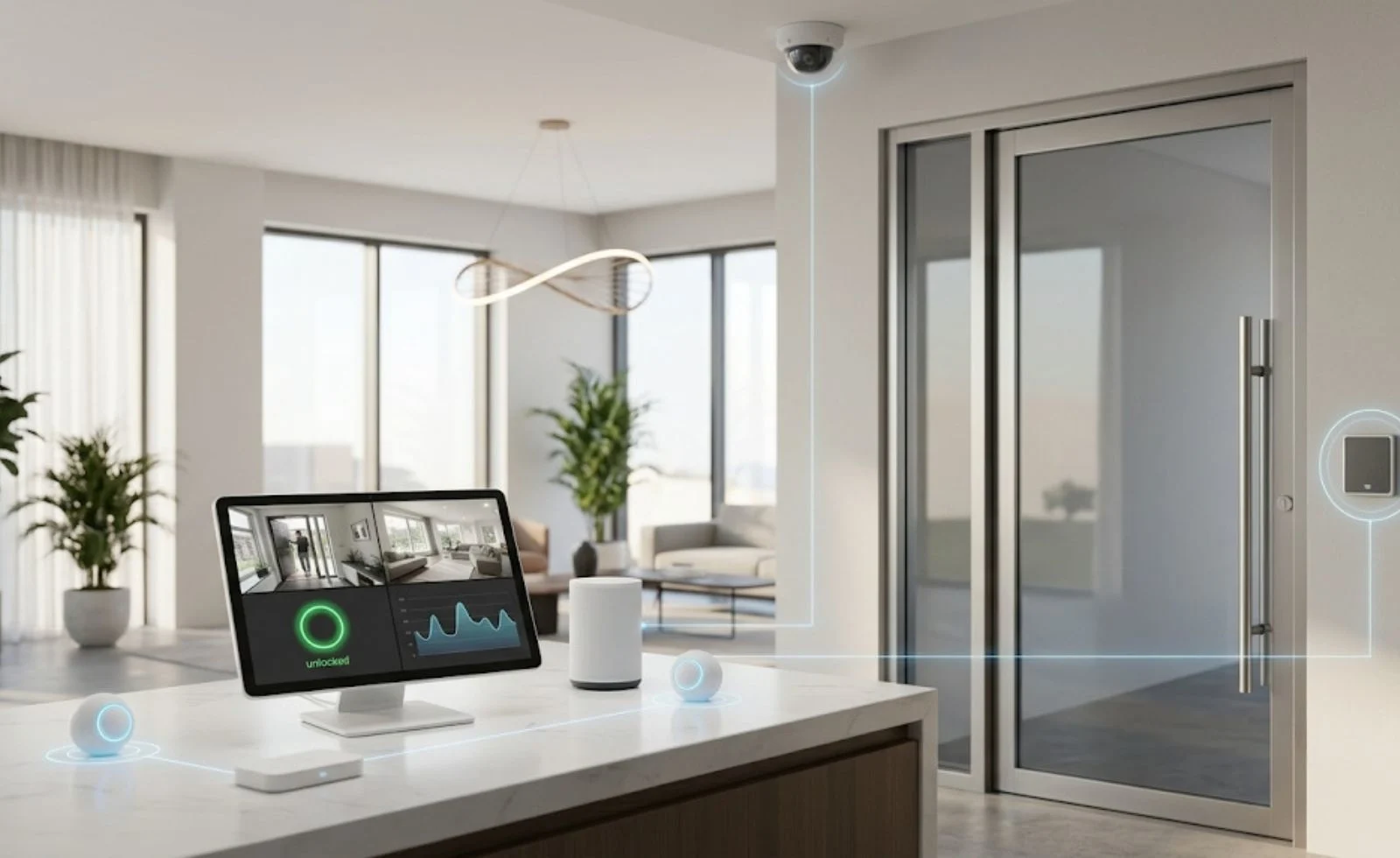
The Simple Definition
An integrated security system is a setup where CCTV cameras, access control devices (like key cards, biometric scanners, or smart locks), and the network infrastructure connecting them all operate as a single, unified platform, instead of three separate systems that don’t communicate with each other.
In an older, “siloed” setup, you might have a CCTV system managed by one app, a door access system managed by another, and a completely separate IT network holding it all together without any real coordination. If something goes wrong, someone has to manually cross-check footage against entry logs, hoping the timestamps line up.
In an integrated system, these tools are connected through a shared network and often a single software dashboard. A door badge swipe can automatically trigger a nearby camera to record. An unauthorized entry attempt can instantly lock down other doors and alert security staff. Everything works together, in real time, from one control point.
Why This Matters More in 2026
Security threats today aren’t just physical break-ins. Many incidents now involve a mix of physical access issues and digital vulnerabilities, a stolen badge, a hacked camera feed, or an unsecured network port. Because of this, businesses are moving away from stand-alone security gadgets and toward connected ecosystems that can be monitored, updated, and protected from a single place. An integrated system isn’t a luxury anymore; for most growing businesses, it’s becoming the baseline expectation.
Breaking Down the Three Core Components
To understand how an integrated system works, it helps to look at each piece individually first.
- CCTV (Closed-Circuit Television)
CCTV is the “eyes” of the system. Modern CCTV has moved far beyond grainy recordings sitting on a hard drive. Today’s cameras are IP-based (internet protocol), meaning they connect directly to a network rather than running through old-fashioned coaxial cables. This allows them to:
- Stream live footage to a phone or laptop from anywhere
- Use AI-based analytics to detect motion, count people, or flag unusual behavior
- Store footage in the cloud instead of only on local servers
- Work alongside other smart devices on the same network
- Access Control
Access control governs who can enter a building, room, or restricted area, and when. This includes key card readers, PIN pads, mobile-credential apps, and biometric systems like fingerprint or facial recognition. A good access control setup doesn’t just lock and unlock doors, it creates a digital record of every entry and exit, which becomes incredibly useful during audits, investigations, or simply understanding foot traffic patterns.
- Networking
Networking is the invisible layer that makes the other two components useful together. It includes routers, switches, firewalls, servers, and the cabling or wireless infrastructure that lets cameras and access control devices “speak” to each other and to a central management platform. Without solid, secure networking, CCTV and access control are just two systems sitting next to each other doing their own thing.
Key Benefits of an Integrated Security System
Faster response times. Automated alerts mean issues are flagged and acted on in seconds, not after someone reviews footage hours later.
Fewer blind spots. Combining video and access data closes the gaps that exist when systems operate independently.
Lower long-term costs. While the setup cost is a factor, one unified platform is typically cheaper to maintain than juggling multiple vendors, software licenses, and support contracts.
Better scalability. Adding a new camera, door, or building location is far simpler when everything already runs on the same network and software.
Improved compliance and reporting. Many industries, healthcare, finance, education, require detailed, accurate access and surveillance records. Integration makes audit trails cleaner and easier to produce.
Remote and mobile access. Cloud-based integrated platforms let authorized staff monitor and manage security from anywhere with an internet connection.
Common Use Cases
Integrated security systems aren’t just for large corporations. They’re increasingly common in:
- Office buildings and co-working spaces
- Warehouses and logistics hubs
- Retail stores and shopping centers
- Schools, universities, and hospitals
- Residential apartment complexes and gated communities
- Government and public infrastructure sites
Each of these environments benefits from the same core idea: connecting who enters a space with what the cameras record, all supported by a network that keeps everything running smoothly and securely.
What to Consider Before Building One
If you’re planning your first integrated security system, keep these points in mind:
- Start with a network assessment. Your cameras and access devices are only as reliable as the network carrying their data. Weak Wi-Fi or outdated cabling will undermine the whole system.
- Plan for scalability. Choose hardware and software that can grow with your business, rather than something that maxes out after a handful of doors or cameras.
- Prioritize cybersecurity. Since everything is networked, devices need firewalls, strong passwords, regular firmware updates, and encrypted data transmission to prevent hacking.
- Think about cloud vs. on-premise storage. Cloud storage offers flexibility and remote access; on-premise storage can offer more control and, in some cases, lower ongoing costs.
- Work with experienced integrators. A poorly configured system creates more problems than it solves. Many businesses looking for reliable access control solutions in Oman pair their security rollout with local IT Services in Oman providers, ensuring the networking backbone is professionally installed and maintained alongside the physical security hardware.
- Train your team. Even the smartest system is only effective if staff know how to use the dashboard, respond to alerts, and manage user credentials properly.
Common Mistakes to Avoid
- Treating CCTV and access control as an afterthought instead of planning them together from day one
- Ignoring network bandwidth requirements, which leads to laggy footage or delayed alerts
- Skipping regular software and firmware updates, leaving devices vulnerable
- Overlooking user access reviews, old employees or contractors who still have active credentials are a common security gap
- Choosing the cheapest hardware without checking long-term support and integration compatibility
Frequently Asked Questions
What is an integrated security system in simple terms?
It’s a setup where CCTV cameras, access control devices, and the network connecting them work together as one system, instead of operating separately.
Do I need access control if I already have CCTV cameras?
Cameras alone only record what happens; they don’t prevent unauthorized entry. Access control actively restricts who can get in, making the two systems far more effective together.
Is an integrated security system expensive to set up?
Costs vary depending on the size of the property and number of devices, but many businesses find that a unified platform saves money long-term compared to managing separate, disconnected systems.
Can an integrated security system be managed remotely?
Yes. Most modern platforms are cloud-connected, allowing authorized users to view footage, manage access permissions, and receive alerts from a phone or laptop anywhere.
How does networking affect CCTV and access control performance?
Networking is the backbone that lets cameras and access devices share data in real time. A weak or poorly configured network can cause delays, dropped footage, or failed alerts.
What industries benefit most from integration?
Offices, warehouses, schools, hospitals, retail stores, and residential complexes all benefit, since each needs both surveillance and controlled entry working in sync.
Are integrated security systems safe from hacking?
No connected system is 100% risk-free, but proper firewalls, encryption, strong passwords, and regular updates significantly reduce the risk compared to unsecured, outdated setups.
Can small businesses use integrated security systems too?
Absolutely. Many providers now offer scalable, cloud-based packages designed specifically for small and mid-sized businesses, not just large enterprises.
What's the difference between cloud-based and on-premise integrated systems?
Cloud-based systems store data offsite and allow remote access from anywhere, while on-premise systems keep data locally, often offering more direct control but less flexibility for remote monitoring.
How do I get started with an integrated security system?
Begin with a network and site assessment, define your access control needs, choose compatible CCTV and access hardware, and work with an experienced integrator to bring it all together securely.
CAT Section: Conclusion, Assessment & Takeaways
Conclusion: An integrated security system isn’t about buying more equipment, it’s about making the equipment you already rely on work smarter, together. When CCTV, access control, and networking operate as one connected platform, you get faster alerts, cleaner records, and a security setup that’s genuinely easier to manage day to day.
Assessment: Before investing, take stock of your current setup. Are your cameras and door access systems already networked? Is your infrastructure ready to support real-time data sharing? Answering these questions honestly will shape how big (or small) your first integration project needs to be.
Takeaways:
- Integration turns three separate tools into one intelligent security layer
- A strong, secure network is the foundation everything else depends on
- Start small, plan for growth, and don’t skip staff training
- The right local expertise makes implementation smoother and more reliable
Security isn’t a one-time purchase, it’s an evolving system. Starting with a clear understanding of how CCTV, access control, and networking fit together is the first, most important step toward building one that actually protects your people and property.